Ancient Khorezm is a unique historical reserve and archaeological destination that has preserved many sites of ancient civilizations on its territory and attracts the attention of tourists and scientists from all over the world. The "Land of a thousand fortresses" is exactly what Khorezm is called for the huge number of ancient monuments located on this territory. In order to promote the rich history and culture of Khorezm, the "CASTLE TOUR" project was developed, aimed at creating new tourist routes through the ancient fortresses located in the Khorezm region and the Republic of Karakalpakstan. We bring to your attention a route through 8 unique objects of the history of ancient Khorezm.
Ichan-Kala State Museum-Reserve
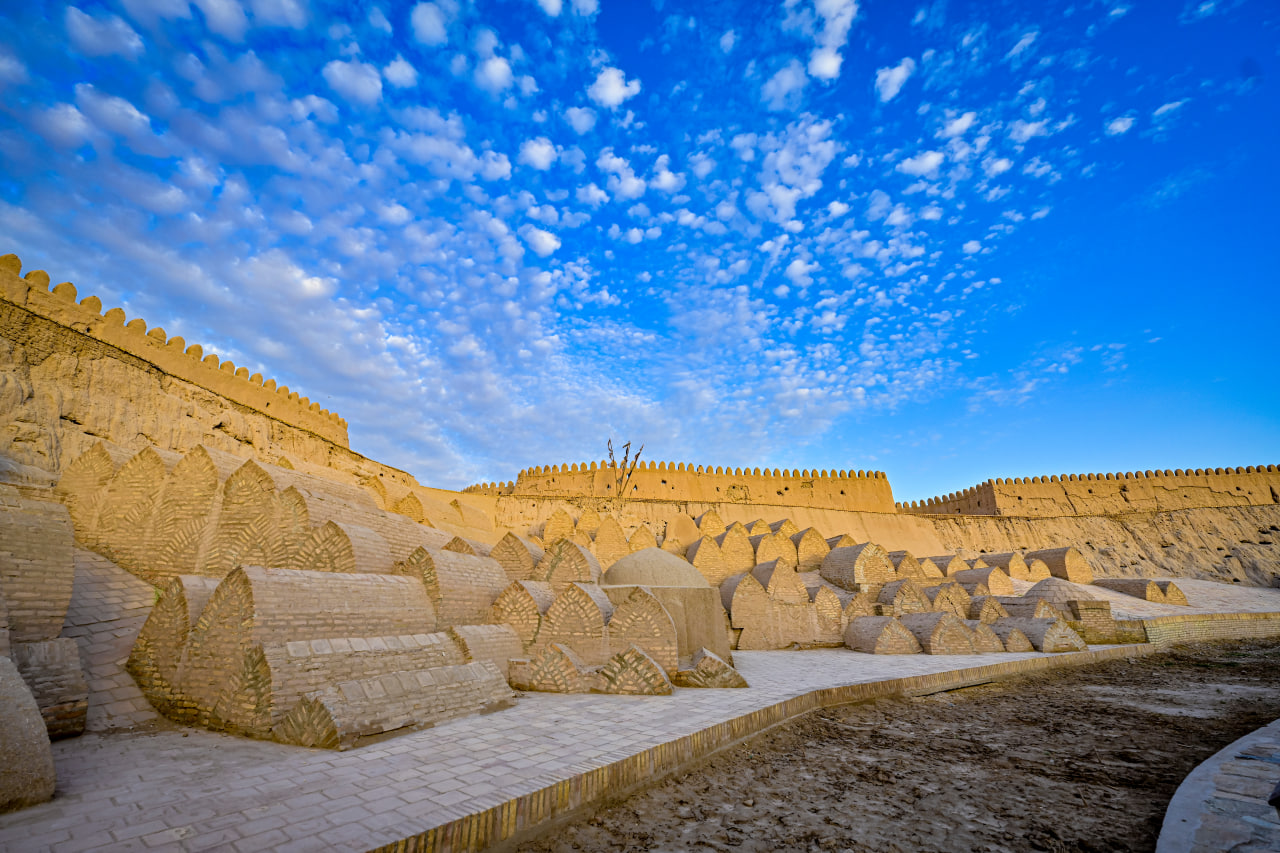
All tourists go to Khiva to see its main treasure– the Ichan-Kala fortress, located in the historical center of Khiva and listed as a UNESCO World Heritage Site. About 60 historical buildings have been preserved in the walls of the ancient fortress. Here you can see such unique historical monuments as the Kunya Ark Citadel complex, the Tash-Khauli palace complex, the symbols of Khiva - the Kalta Minor and Islam Khoja minarets, the famous Juma Mosque with 213 carved columns, and much more.
Kalajik-Kala Complex

The Kaladzhik-Kala archaeological complex is located in the center of the Karakum Desert, 90 km from Urgench. The complex has two main attractions: a 3,000-year-old fortress and a salt lake with healing properties. Kaladzhik-Kala is considered one of the oldest fortresses in the territory of ancient Khorezm. Its walls are 14 meters high and 2.5 meters wide. The Kaladzhik wellness center is located on the territory of the complex.
Suleyman-Kala Complex
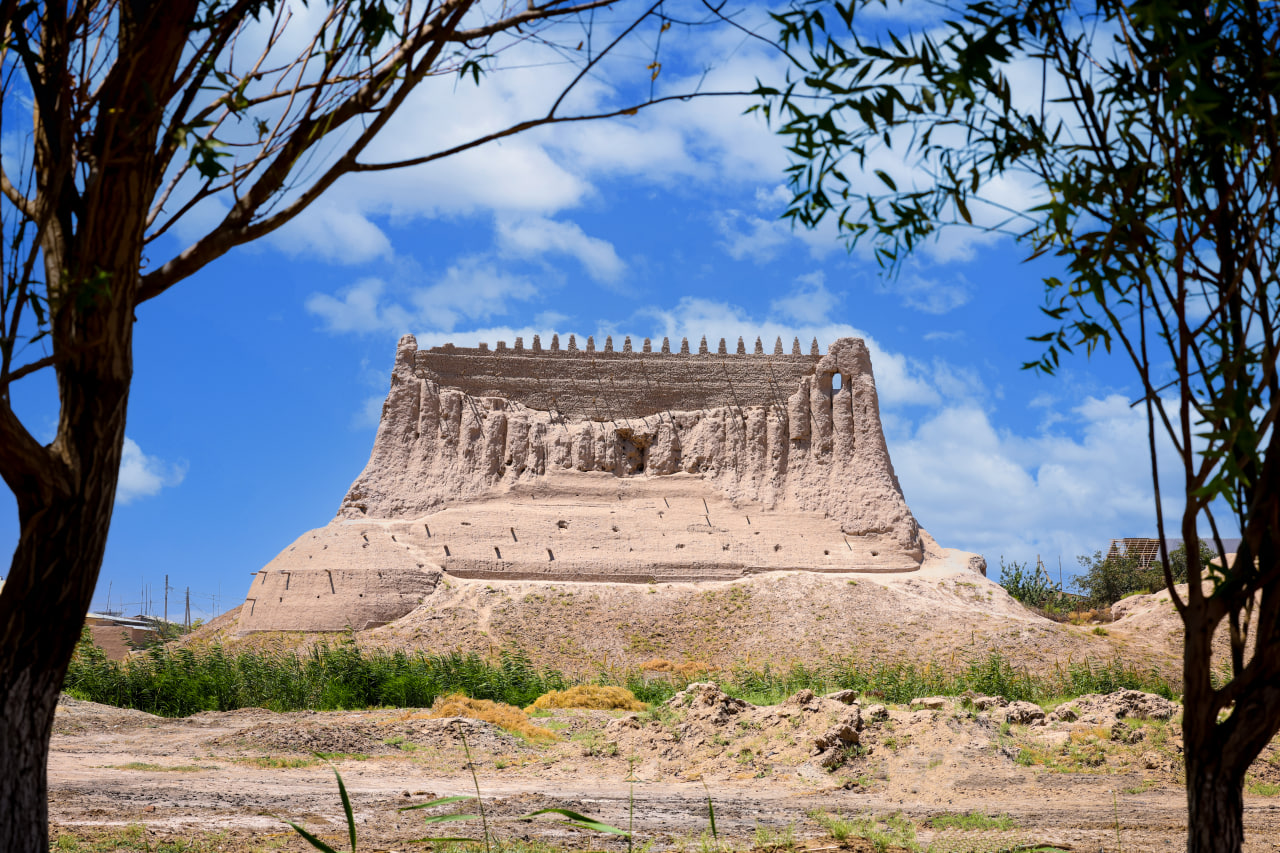
This eastern fortress city, now located in the Khazarasp district of the Khorezm region, was once one of the fortified outposts of ancient Khorezm. It is not for nothing that this fortress is called the "Golden Gate of Khorezm", "Fortress of Solomon" or "Fortress with a thousand horsemen". Khorezm rulers always attached special importance to this fortress city and kept a select detachment of horsemen and infantry there. In addition, this fortress played a significant role in the trade and economic development of the region. Archaeological excavations have been taking place on the territory of Suleyman-Kala for several years now. Based on the discovered finds and cultural layers of the earth, it can be preliminarily concluded that the city is at least 2700-2800 years old.
Ulli Hovli Historical Complex
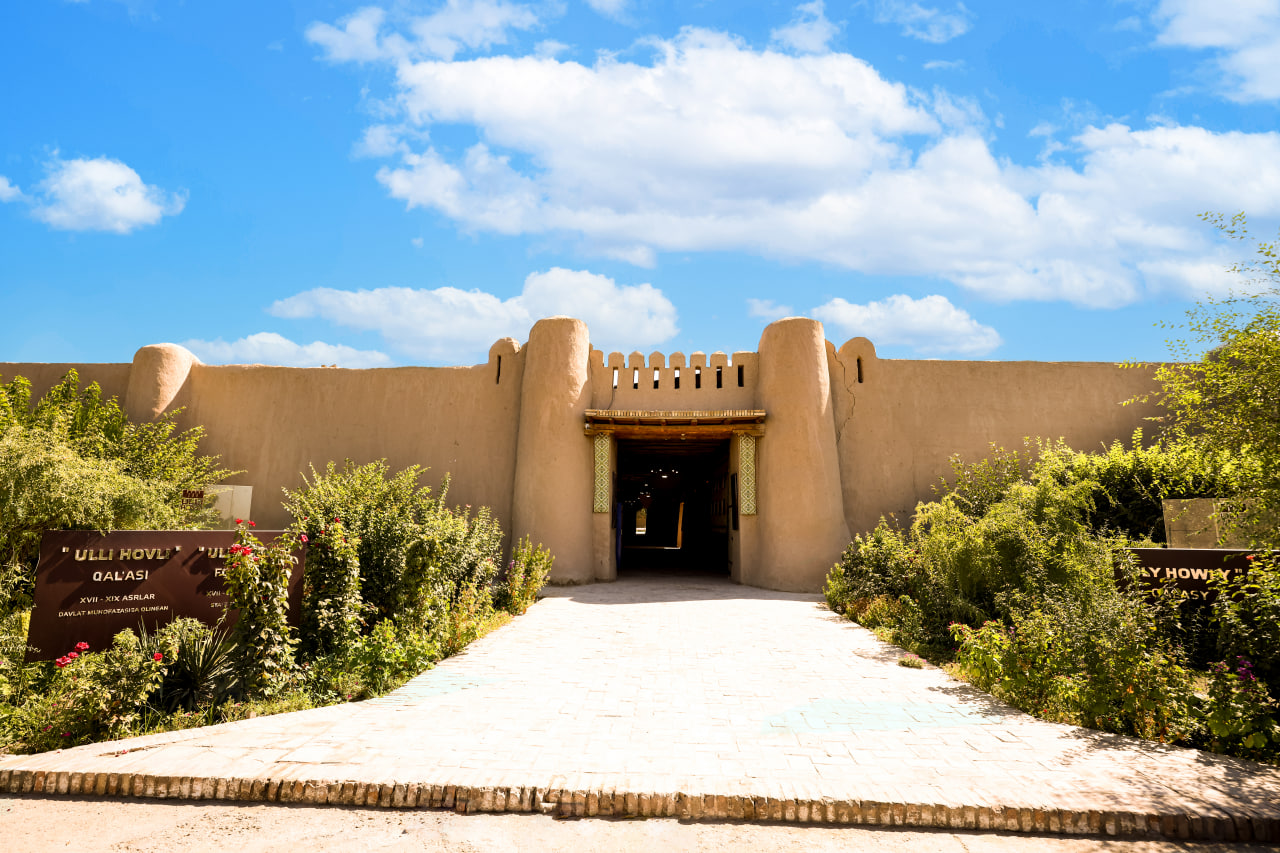
"Ulli Hovli", which means "Big yard", is located in the Urgench district of the Khorezm region. The historical complex was built in 1650-1660 under Abulgazi Bahadir Khan (1603-1664) as a military camp for brave Turkmen who at that time lived between Khiva and Urgench and protected trade caravans passing through this territory from enemy raids. At the request of the Turkmen, Abulgazi Bahadir Khan provided them with a sandy area in the northern part of the Gazavat channel for the construction of a Turkmen settlement. Subsequently, the Turkmens built a whole Ulli Hovli complex on this territory, which became an important object of the cultural heritage of the two peoples.
Toprak-Kala Fortress
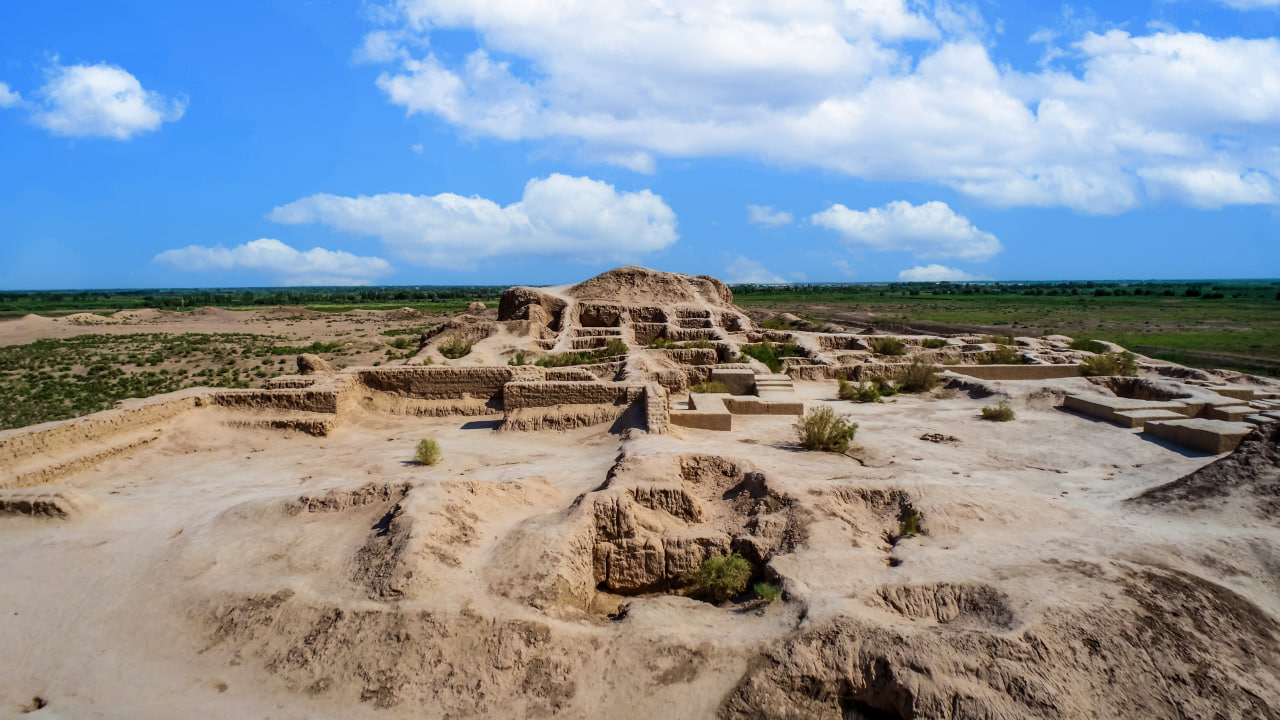
Toprak-Kala Fortress is located 212 meters west of the Nukus-Khorezm highway, 12.3 kilometers northwest of the village of Bustan in the Ellikalinsky district of the Republic of Karakalpakstan. The monument, like many other monuments of the ancient Khorezmian civilization, was discovered by the outstanding archaeologist and historian Sergei Tolstov. This happened in 1938 during exploration work. The area of the settlement is 120 hectares. It is an archaeological monument of the pre-Afrigid era of Khorezm, a fortress city with a sacred palace on a high platform. It was a full-fledged city surrounded by an impressive defensive wall and square towers. The central palace of Toprak Kala is complemented by three sanctuary towers associated with the divine triad – Ahura Mazda, Anahita and Mitra.
Ayaz-Kala Fortress
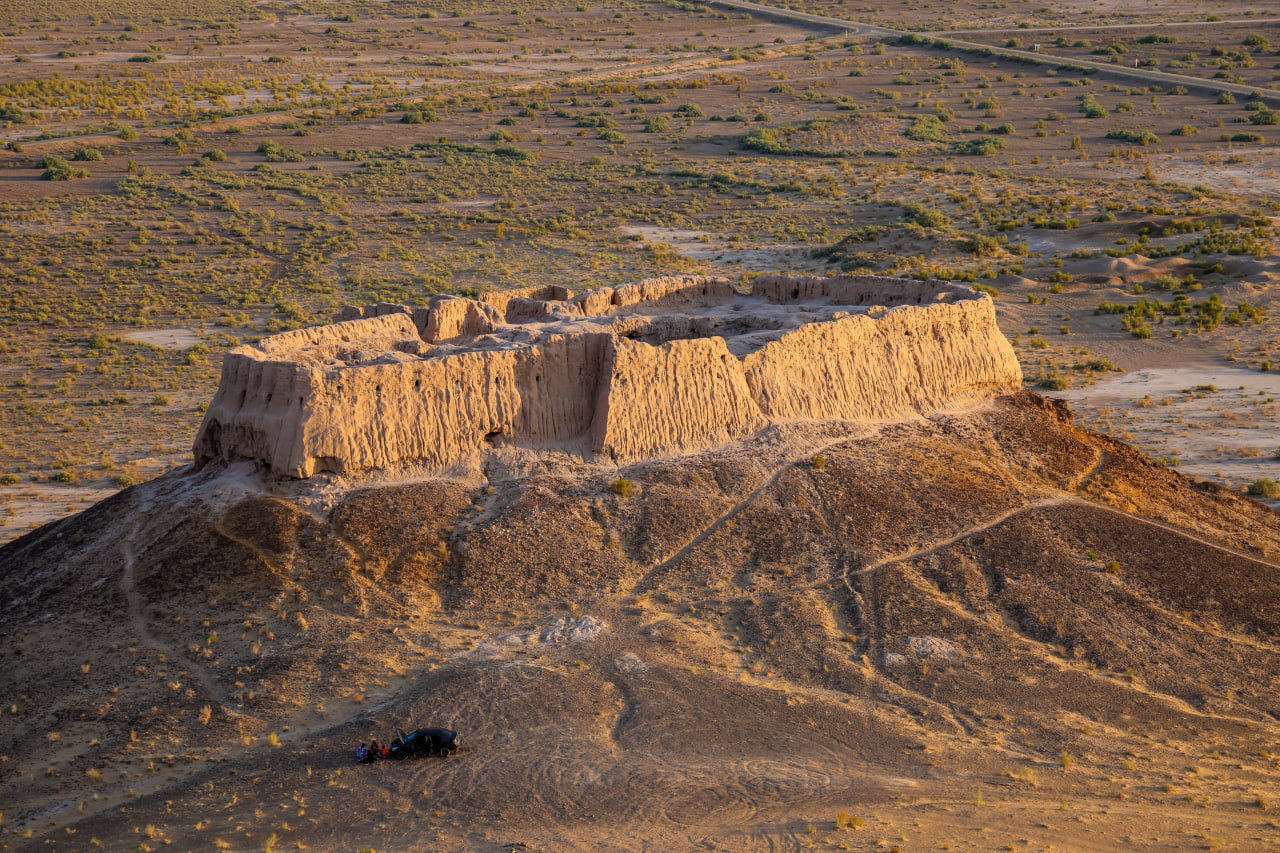
A unique fortress, Ayaz-Kala, is located 20 km northeast of Buston (Ellikala district). The name of the fortress is translated from Turkic as "fortress in the wind". There are 3 Ayaz-Kala settlement fortresses. One dates back to the 3rd-4th centuries BC and is located right here, and the other, a necropolis fortress, dates back to the second half of the 1st century AD and is located southwest of the main fortress. On a high hill, not far from the Salt Lake Ayaz-kul, there is a large fortress of the first settlement of Ayaz-Kala. The second fortress, located nearby, was founded in the Kushan era. The third fortress is located in the south-western part. The fortress is surrounded by a powerful wall, behind them you can see the ruins of a large palace, minarets and labyrinths.
Kyzyl-Kala Fortress
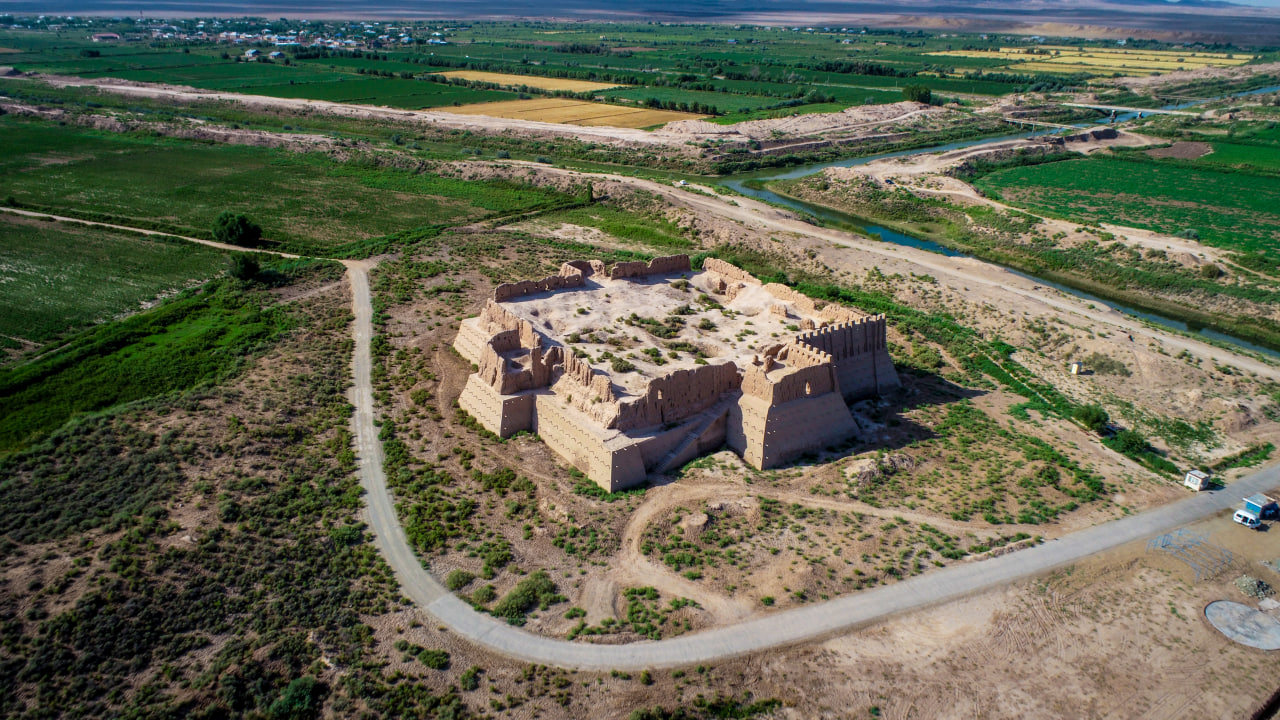
Kyzyl-Kala, which means "Red Fortress" in Turkic, is located 1.3 km west of Toprak-Kala Fortress. Geometrically, the fortress has a square shape and is surrounded by towers on two sides and a wall up to 16 m high with arrow-shaped embrasures. Its entrance can be approached from the southeast via an inclined passage. The fortress was first built in the late antique period, from the 1st to the 4th centuries AD, but was abandoned and rebuilt in the 12th and 13th centuries on the eve of the Mongol invasion. Scientists suggest that the fortress was used as garrison barracks for troops or as fortified manor houses typical of early Medieval Khorezm.
Chilpik-Kala Fortress
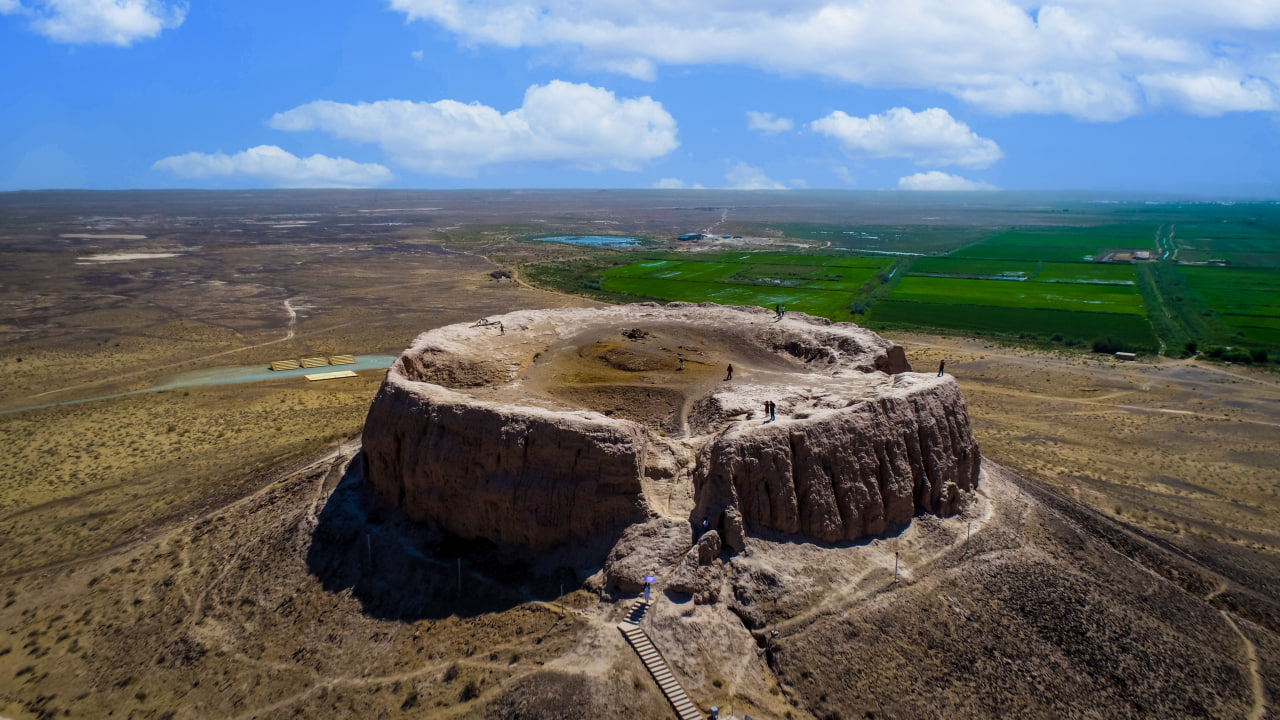
40 km from Nukus, researchers of the monuments of ancient Khorezm should pay attention to the fortress in the form of a round tower at a height of 15 meters and a diameter of 65 meters. This is the Zoroastrian dahma Chilpik or, as it is also called, the Tower of Silence, where the Zoroastrians exposed the bodies of the deceased before burying their bones in ossuaries. The Chilpyk Dakhma impresses with its monumental dimensions and belongs to the period of the flourishing of Zoroastrian culture in Ancient Khorezm at the crossroads of historical epochs. The tower was erected approximately in the late 1st century BC – early 1st century AD. The ancient tower was used as a dakhma and after the invasion of Arab troops in the early 8th century and the establishment of Islam in the lands of Khorezm.
The historical region of Ancient Khorezm, located in the lower reaches of the Amu Darya River, has been famous since ancient times for its ancient civilization, developed irrigation agriculture, handicrafts and trade. The Great Silk Road passed through Khorezm, which contributed to its economic development. And the famous fortresses of Khorezm testify to the high culture and active urban life in the region. A trip through the ancient fortresses of Khorezm will allow you to immerse yourself in the ancient world of lost civilizations and take your mind to the past and the boundlessness of this world.
Working hours: 9:00 AM - 6:00 PM, Mon-Fri
For any questions


 UZB
UZB RUS
RUS CN
CN JPN
JPN ARA
ARA FRA
FRA DE
DE POR
POR ESP
ESP TUR
TUR ITA
ITA HIN
HIN MAL
MAL

Comment